


Welcome to a new edition of ‘Last Week in Earth Observation’, containing a summary of major developments in EO from the last week and some exclusive analysis and insights from TerraWatch.
Four Curated Things
Major developments in EO from the past week
1. Contractual Stuff: Funding, Contracts and Deals 💰
M&A
- French technology firm Thales and defence firm Safran are competing to acquire EO intelligence startup Preligens (in French).
2. Strategic Stuff: Partnerships and Announcements 📈
Partnerships
- SAR data firm Capella Space is teaming up with TCarta, a hydrospatial solution provider to integrate its data into coastal monitoring solutions;
- Israeli EO firm ImageSat International is partnering with Singaporean space tech company ST Engineering, which will see them collaborate on a new high-resolution EO satellite;
- Property analytics solution provider CoreLogic Australia is working together with SAR data firm Iceye to develop a disaster response solution;
- EO data and analytics platform SkyFi has partnered with SAR-based maritime monitoring solution provider Satim and oil & gas intelligence provider Ursa Space;
- Flood risk analytics startup Fathom signed an agreement with the World Bank to offer its flood data for non-commercial use, free of charge, to 16 countries;
Announcements
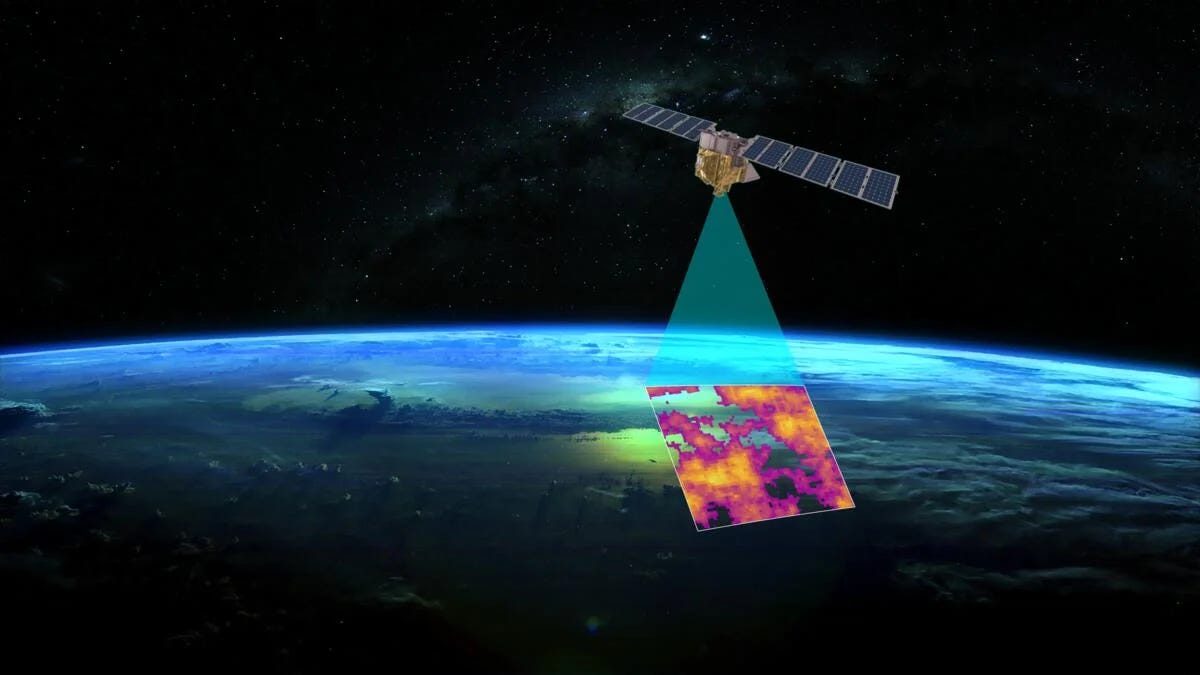
- Google announced its participation in the MethaneSAT satellite mission, through a partnership with the US Environmental Defense Fund, leveraging its experience in AI and mapping to monitor methane emissions.
3. Interesting Stuff: More News 🗞️
- Saudi Arabia is planning to launch a constellation of EO Satellites for environmental monitoring in the country;
- Indian space agency ISRO launched a new meteorological satellite and bid adieu to a high-resolution imaging satellite;
- A new analysis using satellite imagery showed that a methane leak in Kazakhstan continued for over six months.
4. Click-Worthy Stuff: Check These Out 🔗
This interactive piece that demonstrates why and how cities along the US East Coast are sinking as a result of sea level rise;
This article that discusses how using satellite imagery, snorkelling and machine learning we discovered that the world’s coral reefs are actually 25% larger than we thought;
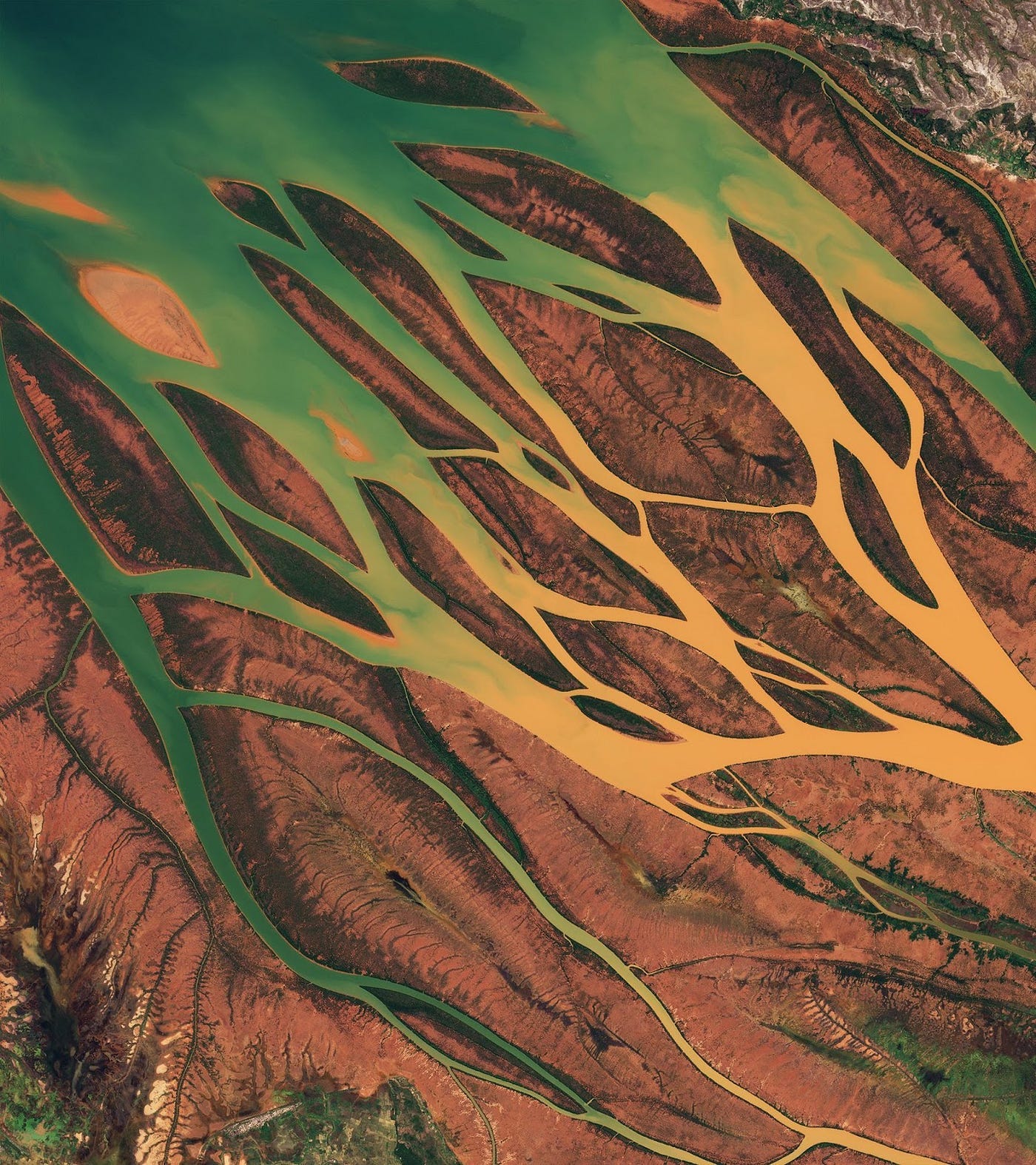
This edition of the Planet Snapshots newsletter with some incredible satellite images of Madagascar.
The image below shows the Betsiboka River, which is supposedly one of the most remarkable views from space.
EO Summit: Why Organise a New EO Conference?
I wrote a blog post explaining why I am organising an EO conference, how it is different from the other events in the EO sector along with the motivation, the vision and the goals for EO Summit. Check it out!

Early-Bird Tickets
A limited number of early-bird tickets for EO Summit are on sale. Benefit from low prices: EUR 249 per ticket.
One EO Discussion Point
Exclusive analysis and insights from TerraWatch
5. A 7-Step EO Adoption Strategy
What is the most optimal way to get end-users to start integrating EO into their workflow to get their job done, while remaining objective and holistic?
Objective: An independent assessment of what EO can do and cannot do, how much does it cost, what are the benefits of using EO for getting the job done.
Holistic: A comprehensive evaluation of remote sensing models to solve a problem - be it satellites, in-situ sensors, drones, manual or a combination .
Over the past couple of years, I have worked with dozens of end-user organisations across the insurance, financial services, agriculture, forestry, and mining sectors, helping them think through how they should approach the use of EO for solving their problems and getting their job done.
Based on my work, I have identified the following 7 steps as a means of engagement with end-user organisations and it has become my go-to format for working with them.
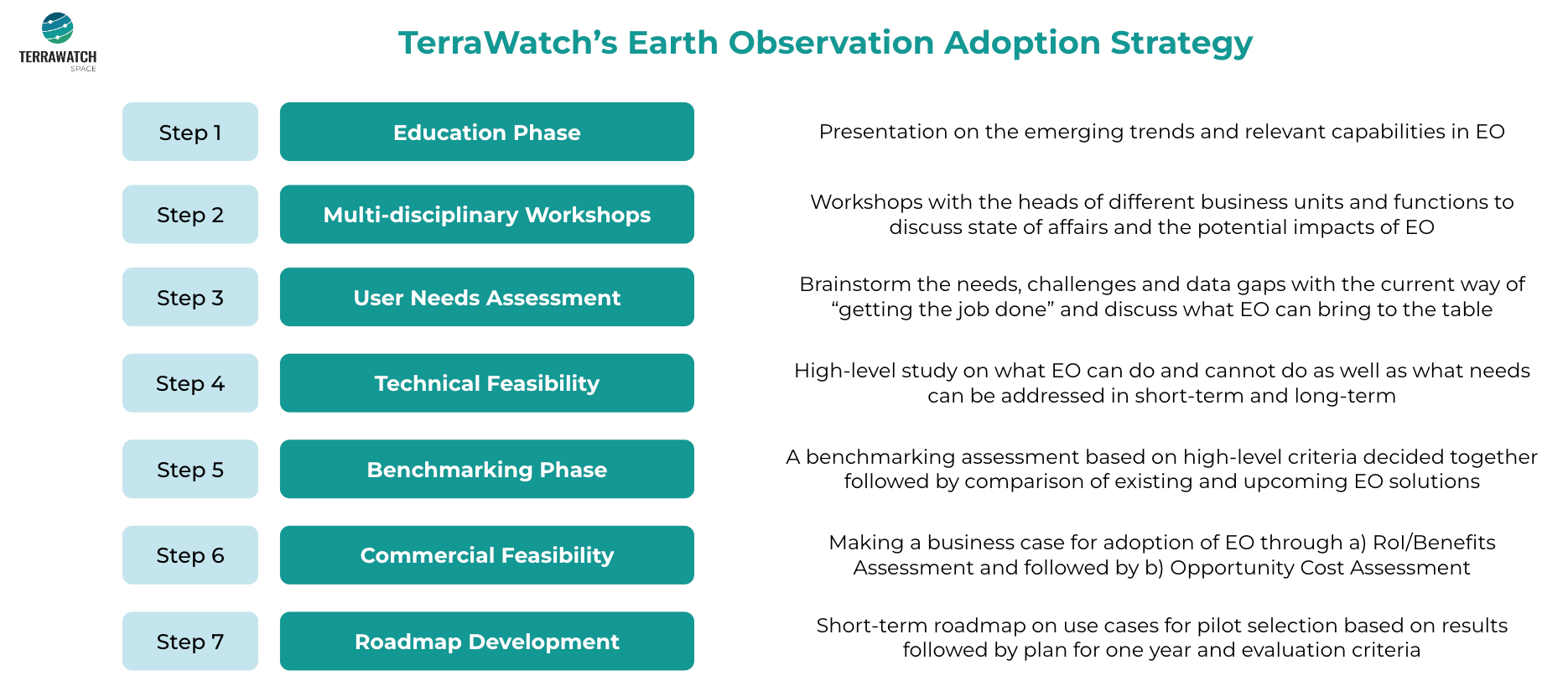
Note that not every organisation needs to go through each of the 7 steps, this is just a comprehensive framework, that I use for my consulting assignments.
- If the organisation is already using EO and just wants to scale up, they could directly go to step 5 and benchmark the various ways to start scaling up.
- If the organisation is already well aware of what EO can do for them and only wants support on validating that, they could start with step 4.
- If the organisations already understand what is EO, but just need support on identifying areas where EO can add value, they could start with step 2.
This is a work in progress. Every end-user organisation is different. Each of them has its problems to solve, varying EO capabilities, different impact priorities, available budgets, and overall KPIs. So, naturally, every organisation has a different strategy for using EO data and it comes with its challenges.
We will discuss the different strategies, next week. But, in any case, irrespective of the organisation, one thing is always clear:
The more I interact with end-users of EO, the more I see that they care more about the EO-based solution being reliable, trustable and scalable than whether the data used to build the solution comes from space, what the type of sensor is and who the provider is.
Scene from Space
One visual leveraging EO
6. Tracking Methane Leaks from Waste
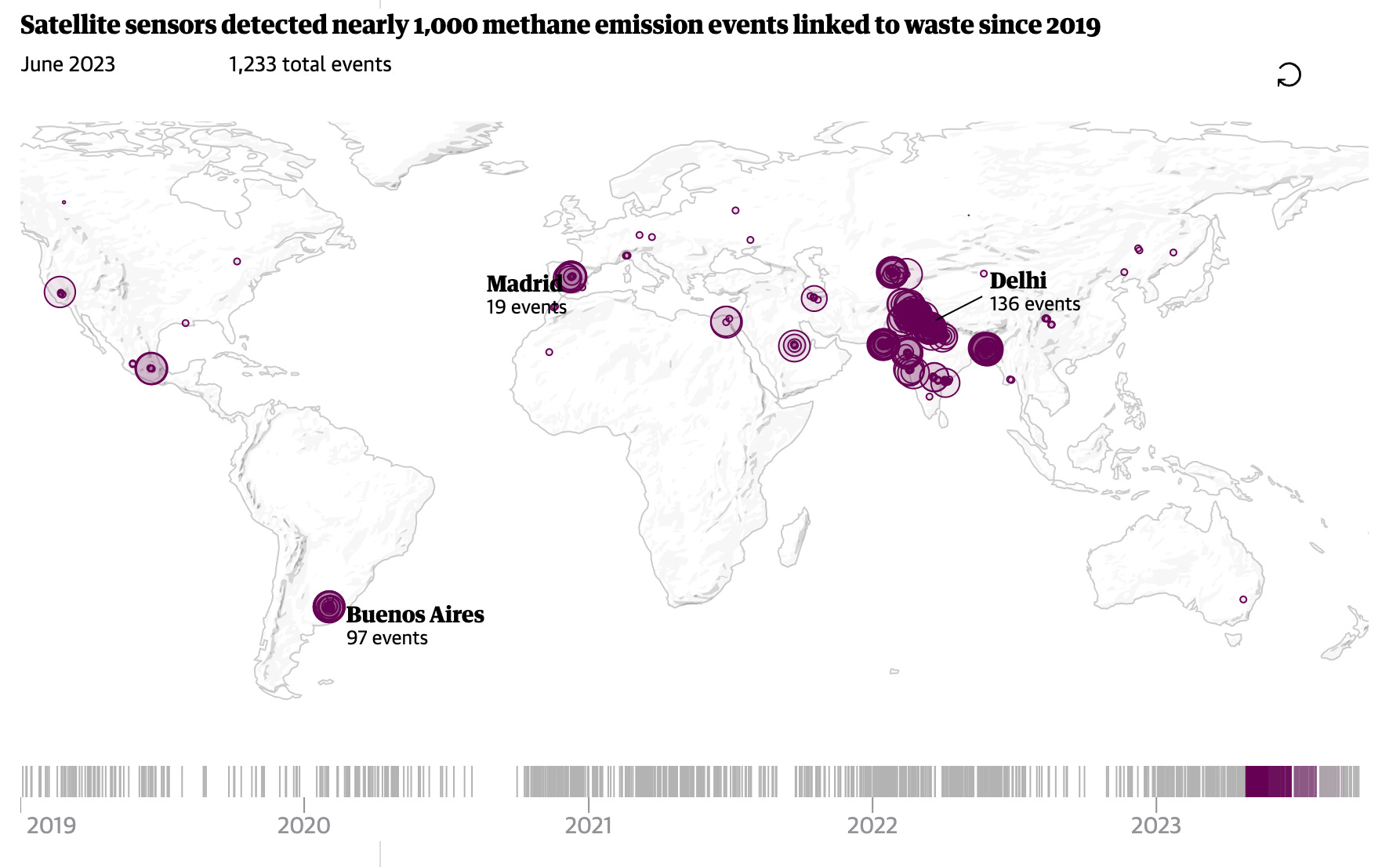
Analysis conducted by French EO analytics firm Kayrros using satellite imagery and reported by the Guardian showed that there have been more than 1,000 huge leaks of methane from landfill waste dumps since 2019, with Pakistan, India, Bangladesh, Argentina, Uzbekistan and Spain recording the largest leaks.
Landfills emit methane when organic waste such as food scraps, wood, cardboard, paper and garden waste decompose in the absence of oxygen. These emissions from the decomposition of waste in landfills are responsible for about 20% of human-caused methane emissions.
Check out the deep-dive on EO for GHG Emissions Monitoring for an overview of the current and planned EO satellites to monitor GHGs and the use cases.
In case this was forwarded, subscribe for free to get your copy every week. Already a free subscriber? Then, become a paid subscriber and get exclusive EO insights.
Until next time,
Aravind.


