


Welcome to a new edition of ‘Last Week in Earth Observation’, containing a summary of major developments in EO from last week and some thoughts on the sector I have come to love.
In this edition: predicting wildfires, weather satellites, Chinese EO updates, optical inter-satellite links, thoughts on the future of EO with 3 types of products and more.
Four Curated Things
Major developments in EO from the past week
1. Contractual Stuff: Funding, Contracts and Deals 💰
- Tomorrow.io, a weather intelligence company building a constellation of satellites with precipitation radars and microwave sounders raised $87M in a Series E round (more, if you want to understand the weather market);
- EO company BlackSky was awarded a multi-year contract worth more than $30M to provide on-demand, real-time high-frequency imagery services to an international defence sector customer;
- Ball Corporation, which owns Ball Aerospace, which has built several Earth science instruments for NASA/NOAA missions, is exploring a sale of the business unit for more than $5B;
- French EO startup Prométhée awarded a contract to French satellite player Hemeria, to supply the first satellite of its planned EO constellation, followed by an additional 20 satellites, all equipped with multispectral sensors;
- Climate risk analytics provider Reask has raised $4.9M in seed funding to continue scaling its global risk mapping and forecasting products;
- Whereobots, a startup building a geospatial platform for enterprises closed a $5.5M seed round.
2. Strategic Stuff: Partnerships and Announcements 📈
Muon Space, a bespoke EO satellite provider, launched its first demonstration satellite and unveiled plans for its Climate Constellation;
Spire announced that the two satellites which were launched on the SpaceX Transporter-8 mission were equipped with optical inter-satellite link payloads, aimed at reducing data latency and increasing data security;
Deloitte released a new report calling on companies to draft long-term space strategies (from an EO perspective, I disagree - more thoughts here).
3. Interesting Stuff: More News 🗞️
- China launched 41 Jilin-1 commercial EO satellites into orbit, part of Changguang Satellite’s plans to have 300 satellites by 2025, capable of providing 10-minute revisit times video, multispectral and infrared data;
- Copernicus, the EU’s flagship EO programme announced the launch of the Copernicus Health Hub, a one-stop-shop for all Copernicus data, products and information having to do with health;
- The World Meteorological Organisation reported that its Climate Risk and Early Warning Systems initiative helped protect at least 111 million people in 2022, thanks to the EO-enabled services;
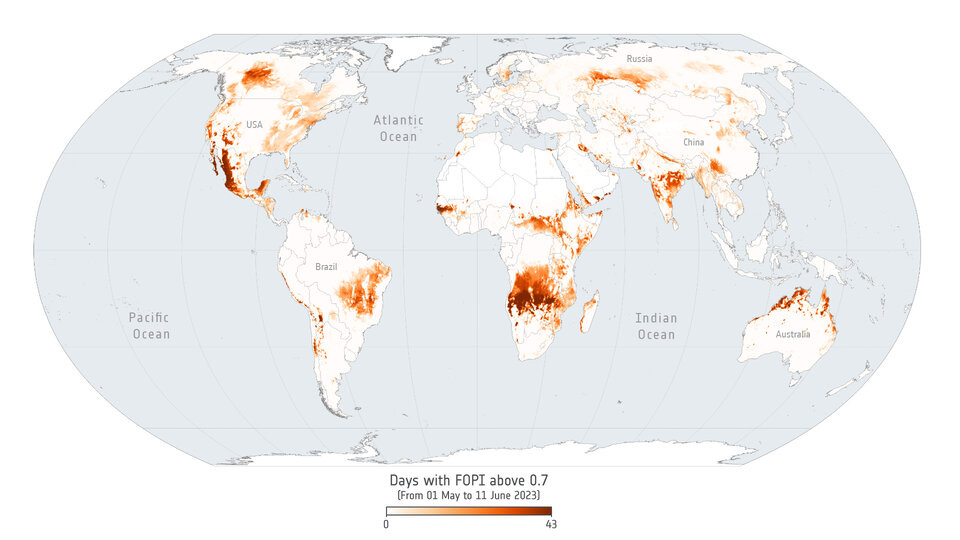
- ESA and ECMWF outlined a new approach to better anticipate the outbreak of fires using data from the agency’s SMOS mission to create the Fire Occurrence Probability Index.
4. Click-Worthy Stuff: Check These Out 🔗
- This piece that outlines how satellite data combined with in-situ data can leverage AI to stop water pollution, with a case study from the UK;
- The UK’s geospatial strategy 2030 document outlining the opportunity in geospatial and the plans for unlocking the power of EO;
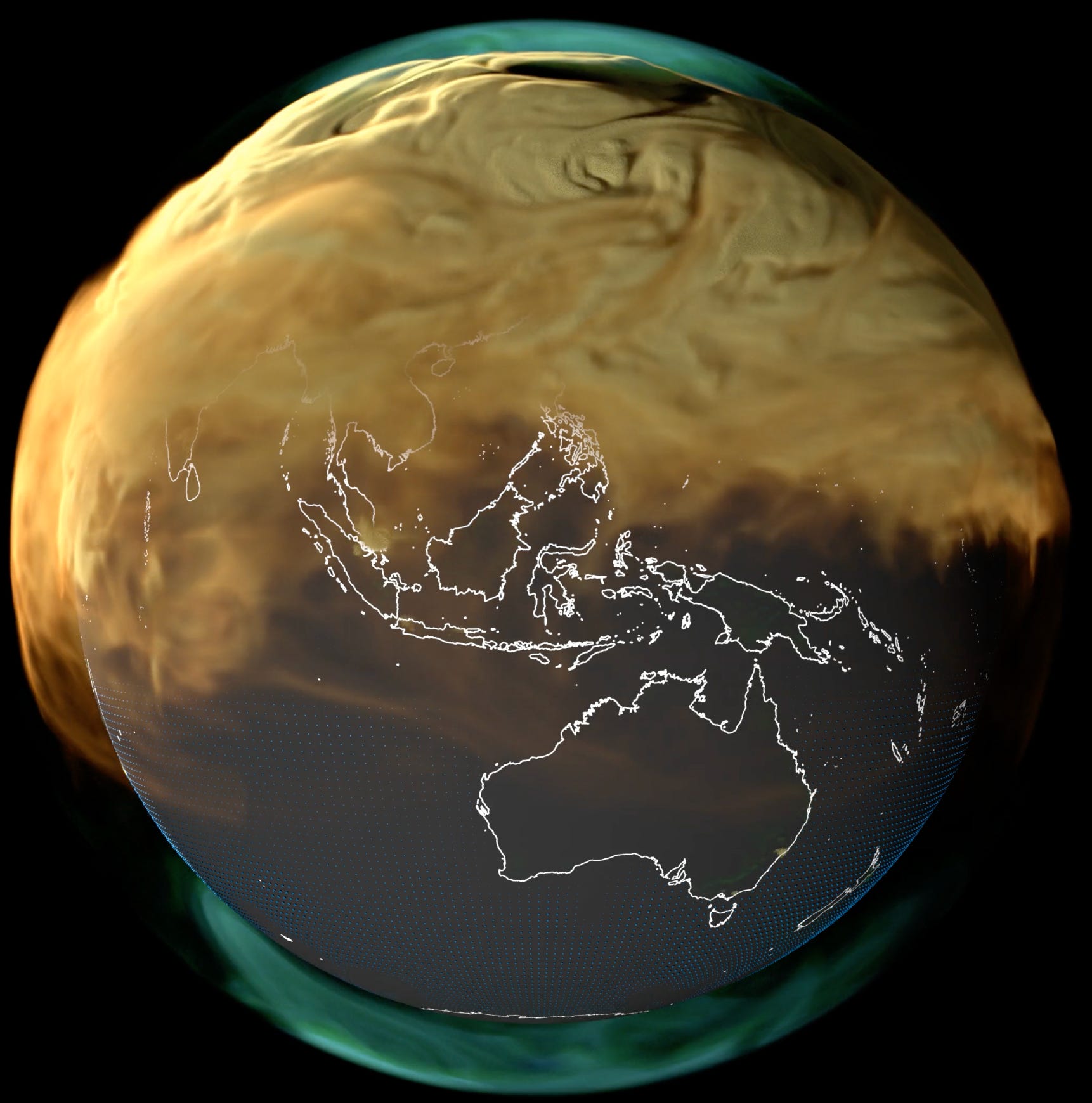
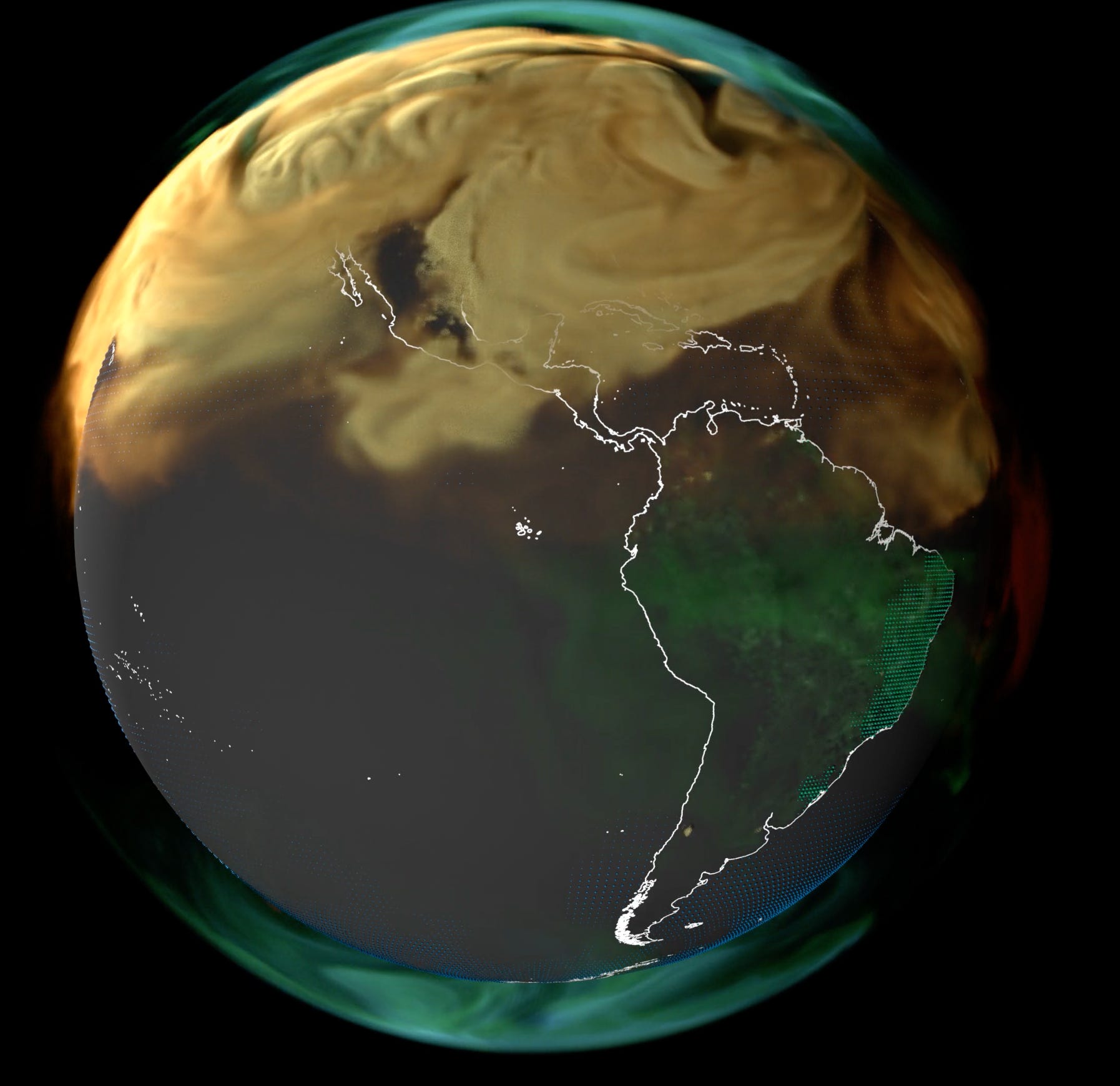
- These brilliantly done visualisations from NASA showing atmospheric carbon dioxide emissions tagged by source - fossil fuels in orange, burning biomass in red, land ecosystems in green, and the ocean in blue.
Subscribe for more Earth observation insights!
One Discussion Point
Analysis, thoughts, and insights on developments in EO
5. The future of EO with 3 types of products
I have spent a lot of time thinking about what kind of EO-derived products we build, how they are adopted and the financial sustainability of the models. Given how fundamental EO is to our lives and the functioning of our economies, I decided to take a pragmatic view of looking at EO and classified them into 3 types of products. These are just some high-level thoughts, I hope to expand on them more over time. So, bear with me.
On a fundamental level, I think there are 3 types of products derived from EO:
Products that are commercial and revenue-driven that fill a data gap and/or solve a business problem - these are usually driven by private and enabled by public investments, with most of their use targeted at businesses;
Examples include monitoring pipelines for leaks, reporting climate risks of assets, vegetation monitoring over power lines etc.
Products that are public goods and savings-driven that help save lives and reduce economic damages - these are usually driven by a combination of public and private investments, and increasingly philanthropic organisations, with most of their use targeted at businesses and individuals;
Examples include daily weather forecasts, air quality metrics, flood maps, emission levels, coastal sea rise levels etc.
Products that are scientific and research-driven that generally focus on advancing EO or the application of EO in a specific domain - these are usually driven by public investments, with some support from private actors and high-net-worth individuals, predominantly aimed at progressing our understanding of the planet, the biodiversity and our impact on it.
Examples include understanding the science behind wildfires, the evolution of the water and carbon cycles etc.
Each of these requires different funding mechanisms, governmental policies and governing mechanisms. Today, it seems like there are some attempts that try and do all the 3 products together under one setup, while, in other cases, there are significant lines being drawn to differentiate. As we look towards the future of EO, it is crucial that we underline the benefits and the importance of each approach. There are merits to separating the value of all the 3 models, while also doing our best to combine all 3 models in one. More to come!
Scene from Space
One visual leveraging EO
6. We temporarily exceeded the 1.5C threshold
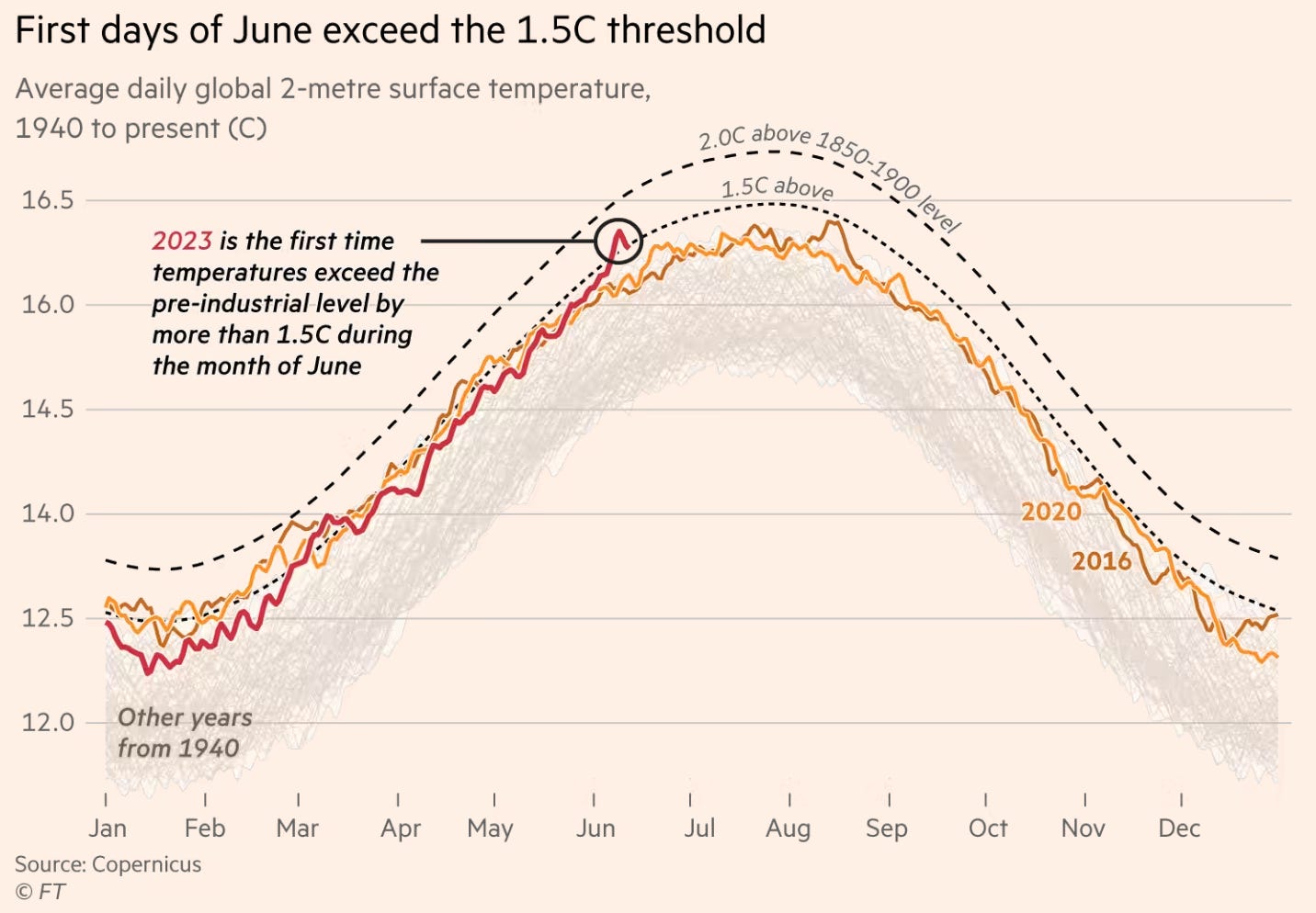
Scientists at the Copernicus Climate Change Service reported that the first 11 days of June had been the hottest on record for this time of year and that the 1.5C warming threshold had been temporarily crossed. This climate target was agreed upon during The Paris Agreement, through which countries committed to limiting long-term warming to 1.5C above pre-industrial levels.
The FT reported that this threshold was first exceeded in December 2015 and crossed “repeatedly” in 2016 and 2020 and that this year is the first time it has been breached in June. A worrying sign of the things to come?
One Podcast Episode
From the TerraWatch Space podcast
7. A deep-dive on Planetary Variables from Planet
A couple of years ago, Planet acquired VanderSat, a Dutch startup offering data products like soil moisture derived from various sources of satellite data.
Today, VanderSat's capabilities are integrated into Planet and the fruit of that collaboration is what Planet calls Planetary Variables (PVs), a set of products that are directly usable by end-users without the need to process satellite imagery. As an advocate of making EO mainstream, I have been quite excited about PVs ever since the announcement. So, I decided to have a chat with Thijs, who was the CEO of VanderSat before the acquisition, on the podcast.
In this episode, we discuss VanderSat's journey, what are Planetary Variables, what data sources they use, the black-box problem, Planet's vision for Planetary Variables and more.
Until next time,
Aravind.


