


Welcome to another edition of ‘Last Week in Earth Observation’, containing a summary of major developments in EO from last week and some exclusive analysis and insights from TerraWatch.
In this edition: Revisiting my thesis on the future of EO, forest carbon product, EO Summit update, monitoring icebergs with AI and EO and more.
Four Curated Things
Major developments in EO from the past week
1. Contractual Stuff: Funding, Contracts and Deals 💰
Quarterly Earnings Reports
- Spire reported quarterly revenues of $27.3M, a 34% increase compared to last year fueled by institutional contracts from NASA and NOAA, as the company claims that it will be cash flow positive by Q3 2024;
- BlackSky reported quarterly revenues of $21.3M, a 26% increase compared to last year fueled by defence contracts from international governments, as the company aims to achieve operational profitability by Q4 2024;
2. Strategic Stuff: Partnerships and Announcements 📈
Partnerships
- Polish satellite manufacturer SatRev is joining hands with South Korean company TelePIX, for whom SatRev will build and launch a 6U cubesat integrated with TelePIX’s onboard processing instrument;
- Australian EO data management and distribution firm Arlula is partnering with BlackSky to integrate their imagery into Arlula’s marketplace;
- Hyperspectral imagery firm Pixxel is partnering with EUSI, a European EO data firm, to distribute Pixxel’s data in the European market;
- GHG monitoring firm GHGSat, which launched the first commercial CO2 sensor, is teaming up with aerospace firm Kairos Aerospace to demonstrate multi-scale methane emission monitoring for the energy sector;
- EO data marketplace UP42 is partnering with GLOBHE, a drone data marketplace to make the drone data available through UP42;
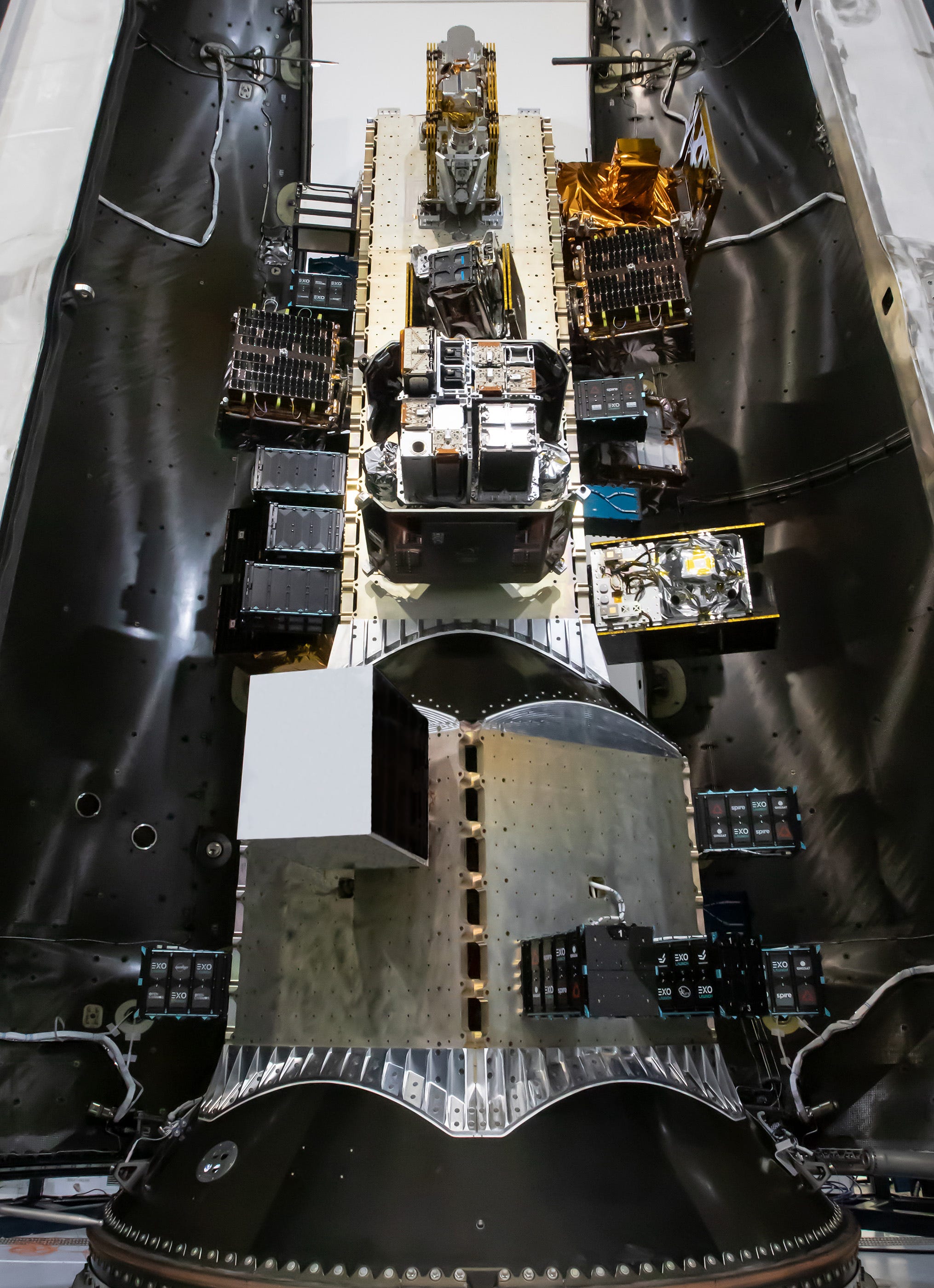
- SpaceX launched at least 66 EO satellites from about 14 different EO companies, as part of the Transporter-9 rideshare mission - for a detailed breakdown of the EO satellites launched, check out my post on LinkedIn/X;
Announcements
- French startup Agenium Space announced a successful validation of its in-orbit object detection demonstrator on Loft Orbital's Yam-3 satellite;
- Environmental monitoring firm Vizzuality published a new collection of data on Source Coop that will allow businesses to measure the land, carbon and biodiversity impacts of agricultural supply chains;
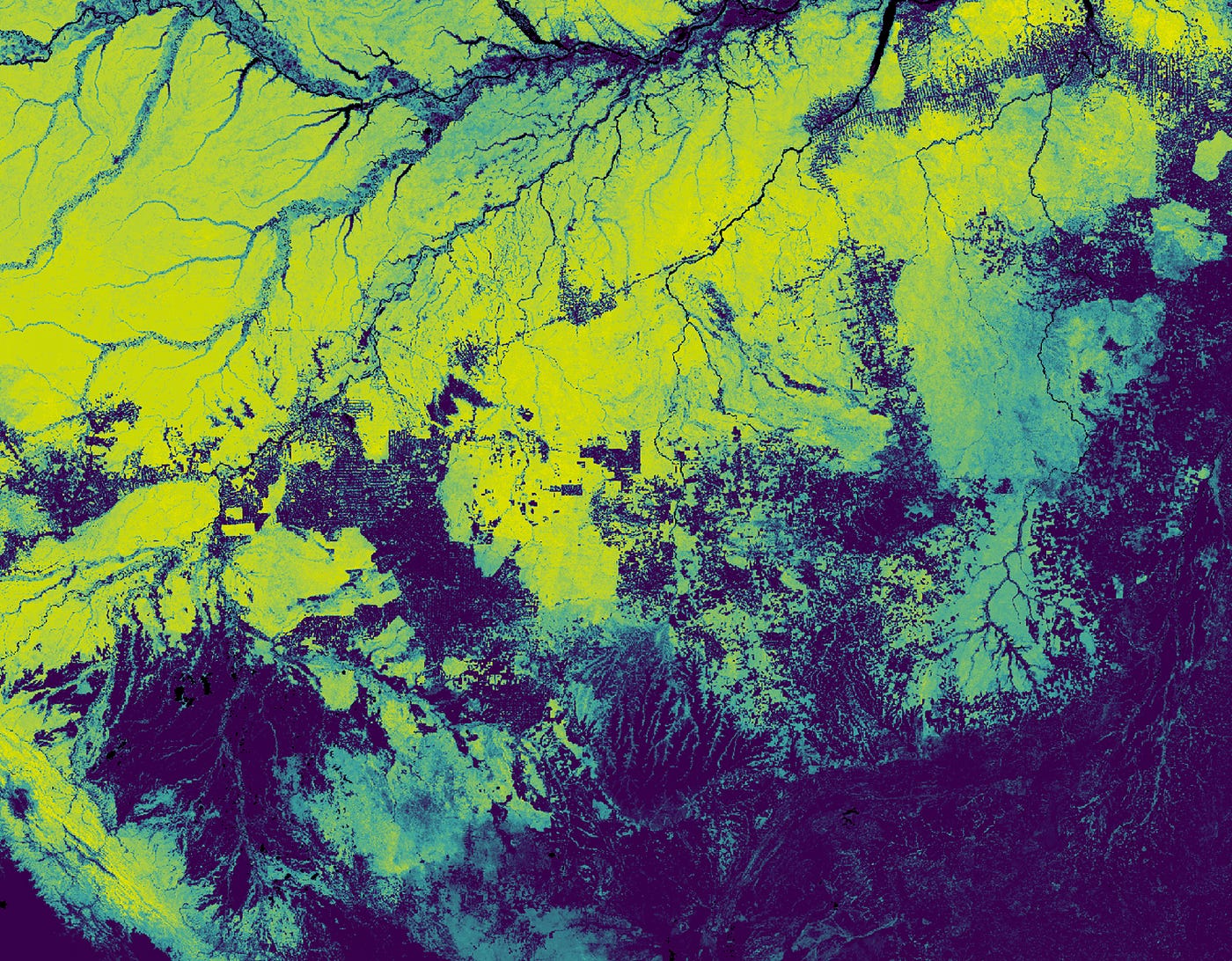
- Planet announced the launch of its Forest Carbon Diligence product - a global, 30-meter historical time series of forest carbon, as well as tree height and cover, expected to be used in carbon accounting projects.
My take: The availability of global forest carbon data, derived from Planet’s proprietary data, in combination with other data sources, as an API ready for analysis, as opposed to raw EO imagery for processing, is definitely a milestone, both for the EO sector and for the company.
While the validation of the data and the corresponding methodology (whatever is made available by Planet) will happen over the coming months, the company’s strategy to go down the value chain - providing analytics vs data - is an interesting shift, again for both the company and the EO sector.
The following image shows a map of aboveground Forest Carbon along the Amazon Rainforest. Yellow represents the highest levels of carbon, green and blue indicate progressively less carbon, while dark purple areas are not forested.
3. Interesting Stuff: More News 🗞️
- While there are reports of EO companies restricting the distribution of satellite imagery over Gaza, US officials said that they won’t require the companies to change what they release to the public;
- The European Union Agency for the Space Programme handed out €2.85M in prizes to three teams to detect, and remove plastics from water bodies;
- EO company Satellogic published an article that discusses how their 70 cm imagery might be a more affordable option for applications that require high-volume data than 30 cm imagery (at least by today’s price points);
- ESA and the European Commission will collaborate to accelerate the use of EO to facilitate the implementation of the European Green Deal;
4. Click-Worthy Stuff: Check These Out 🔗
- This paper that provides a detailed overview of the Segment Anything Model published by Meta AI;
- This piece on TerraWatch that presents the thinking and the process behind Sponsored Content on this platform (if you are interested in collaborating to write educational content on EO, featuring your company, do reach out);
- This paper that proposes a methodology for the use of EO to report biomass and be used in national carbon stock takes;
If this was forwarded to you, please subscribe to receive Earth observation insights!
One EO Discussion Point
Exclusive analysis and insights from TerraWatch
5. Revisiting My Thesis on the Future of EO
A lot of people ask me whether the future of EO will be about EO data companies, EO platform companies, or EO product companies. When I give my response, some people think I am giving them the consultant talk or being too cheesy. But, I have always maintained that we are asking the wrong questions in Earth observation - it's not about whether we should be selling data, analytics, insights, or products, but actually asking what is the overall impact of satellite data for the customer (RoI in business talk), and the cost of not doing so (opportunity cost in business talk).
The future of EO lies in our ability to look beyond the type of sensor, the name of the provider, or the satellite and look deeper into the problems that can be solved with EO, and the impact that it can have, with an objective, and holistic mindset.
We need to start by getting a deeper understanding of the significance and consequences of using satellite data for the customer and letting that dictate what the product is going to be and how it will look like, which technologies will enable the product, and how it is delivered to the end customer. I believe that the future of EO lies in our ability to learn the impact of the technology on the end user and build our solutions accordingly.
Of course, it is always not obvious what customers want nor can they articulate it properly (as Steve Jobs famously said). But, unlike an Apple product, EO is really just one of the many tools available for users to help them get their job done. So, it is imperative that we dig deeper into what their job is and how it is currently done to understand how EO while being the background, can help them do their jobs faster, better, cheaper, and more effectively.
An “impact-driven EO strategy”, as I call it, will help us decide:
if the customer needs data, analytics insights, or a custom-built product;
what other sources of data will be needed to have the desired impact;
whether it is an API, a mobile app, a dashboard, or a white-labelled solution.
Scene from Space
One visual leveraging EO
6. Monitoring Icebergs with AI and EO
I hear you, those are two big buzzwords. However, a study published recently demonstrated the use of deep learning techniques on Sentinel-1 imagery to automate the process of monitoring icebergs and tracking how they change over time - the algorithm completed the process accurately in a mere 0.01 seconds vs the several hours and days it would have taken with manual efforts.
The image below (linked to an animation), from ESA, shows the AI model in action - (automatically) detecting the shape of various icebergs accurately, which is vital for quantifying how much meltwater they release into the ocean.

An Update on EO Summit
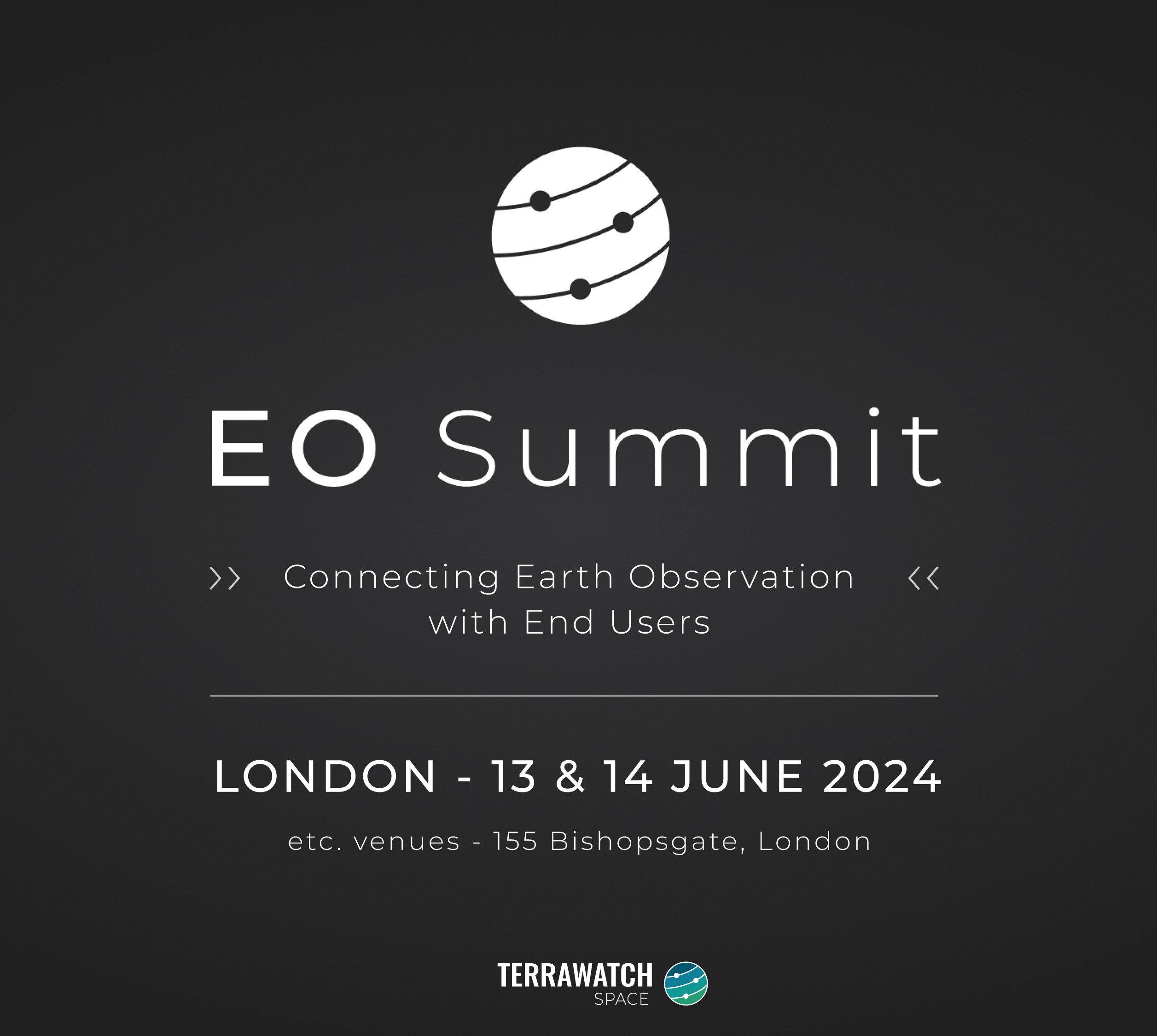
It has been a while since you have had any updates on EO Summit, the conference organised by TerraWatch, with an aim to bring the EO industry and end-users together, focused on commercial, enterprise and climate-related applications of EO.
There has been some work going on behind the scenes, but finally, I am excited to announce the dates and the location for the first-ever EO Summit. It will take place in London on June 13 and 14, 2024. Mark your calendars!
Early-bird registration coming soon. Interested in sponsoring the event? Just reply to this email, or send me a message on LinkedIn/X.
Until next time,
Aravind


