


Welcome to this edition of ‘Last Week in Earth Observation’, containing a summary of major developments in EO from last week and some exclusive analysis and insights from TerraWatch.
In this edition: EO for voluntary carbon offsets, heat mapping from space, monitoring the age of forests and focusing on action while monitoring GHGs.
Four Curated Things
Major developments in EO from the past week
1. Contractual Stuff: Funding, Contracts and Deals 💰
Contracts
- OHB Digital Services, a subsidiary of the space group OHB, was awarded a contract worth €1.7M by the European Union Agency for the Space Programme to lead the "Copernicus Demonstrators - Mobility, Emergency and Infrastructures" project;
- Planet has expanded contracts with existing customers across four Canadian provincial governments, to support disaster response operations;
- NASA selected seven EO companies to provide commercial data as part of its Commercial Smallsat Data Acquisition Program - Airbus DS Geo, Capella Space, GHGSat, Maxar, PlanetiQ, Spire Global and Umbra will compete for contracts with a maximum value of $476 million over five years.
My take: This is a big win for all the EO companies, given that the total value of this contract is the second largest share of the total addressable market in Earth observation (following defense).
This is also excellent news for the research community in the US as they get access to diverse, multi-sensor commercial data to complement data gathered from public satellite missions.
2. Strategic Stuff: Partnerships and Announcements 📈
Announcements
- Insurtech firm CAPE Analytics has launched a new wildfire intelligence suite for commercial properties to assess wildfire vulnerability;
- Verra, the world’s largest certifier of voluntary carbon offsets, announced a new methodology for Afforestation, Reforestation and Revegetation projects, which is based on the use of remote sensing data (for more on EO for carbon markets, stay tuned for this month’s exclusive deep-dive);
- Open Cosmos announced plans for the launch of the MANTIS satellite, which will include a multispectral instrument and an edge computing unit;
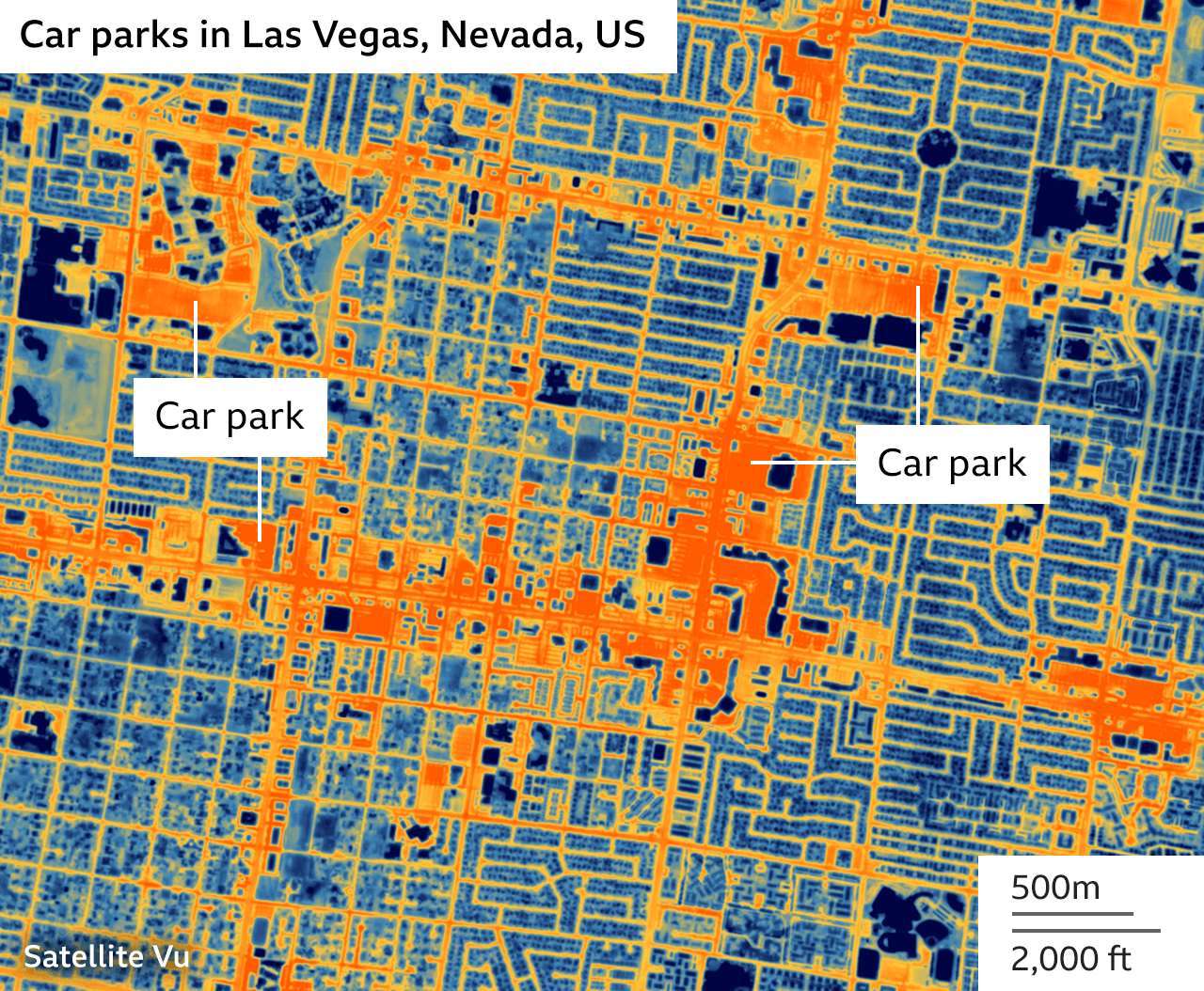
- UK-based EO firm SatelliteVu has released the first images from its HotSat-1 satellite, showing heat variations through the thermal infrared sensor.
3. Interesting Stuff: More News 🗞️
- The return of the European launcher Vega C has been delayed until late 2024, putting question marks on the launch of the critical Sentinel-1C satellite;
- The US government has issued its first-ever fine to a company for leaving space debris orbiting the Earth;
- CTrees, a non-profit organisation has demonstrated how to map and quantify tropical forest degradation using a deep learning model based on data from Planet;
4. Click-Worthy Stuff: Check These Out 🔗
- This report that presents case studies on using different sources of data including EO to track the Sustainable Development Goals in China;
- This open-access book to learn how to work with Google Earth Engine;
- This paper that discusses the use of diffusion models that use cartographic data to generate realistic satellite images;
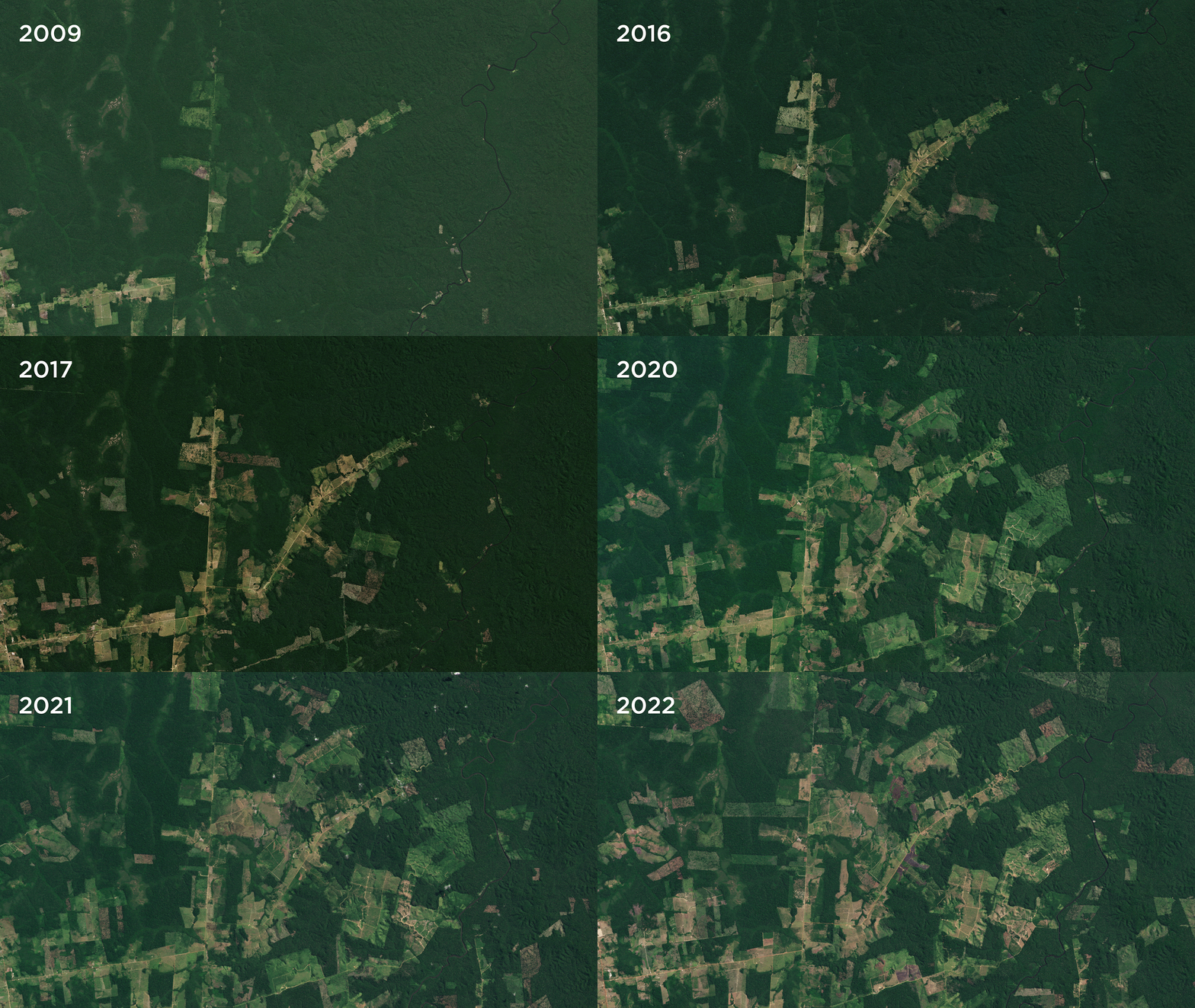
- This edition of the Planet Snapshots newsletter that showcases the level of deforestation in the Amazon.
If this was forwarded to you, please subscribe to receive Earth observation insights!
One Discussion Point
Analysis, thoughts, and insights on developments in EO
5. Earth Observation for GHG Monitoring: Focus on Action
Recently, I published a deep dive on the state of GHG monitoring from space, an overview of the current and planned EO satellites to monitor GHGs and why all of this matters. But I cannot stress this enough.
Irrespective of what the satellites can see, it is all about what we do with it. As much as I demystify the role of EO, I recognise the concept of the "knowledge-action gap." If the knowledge gathered from EO has not resulted in meaningful action, then the value of EO is not fully realised.
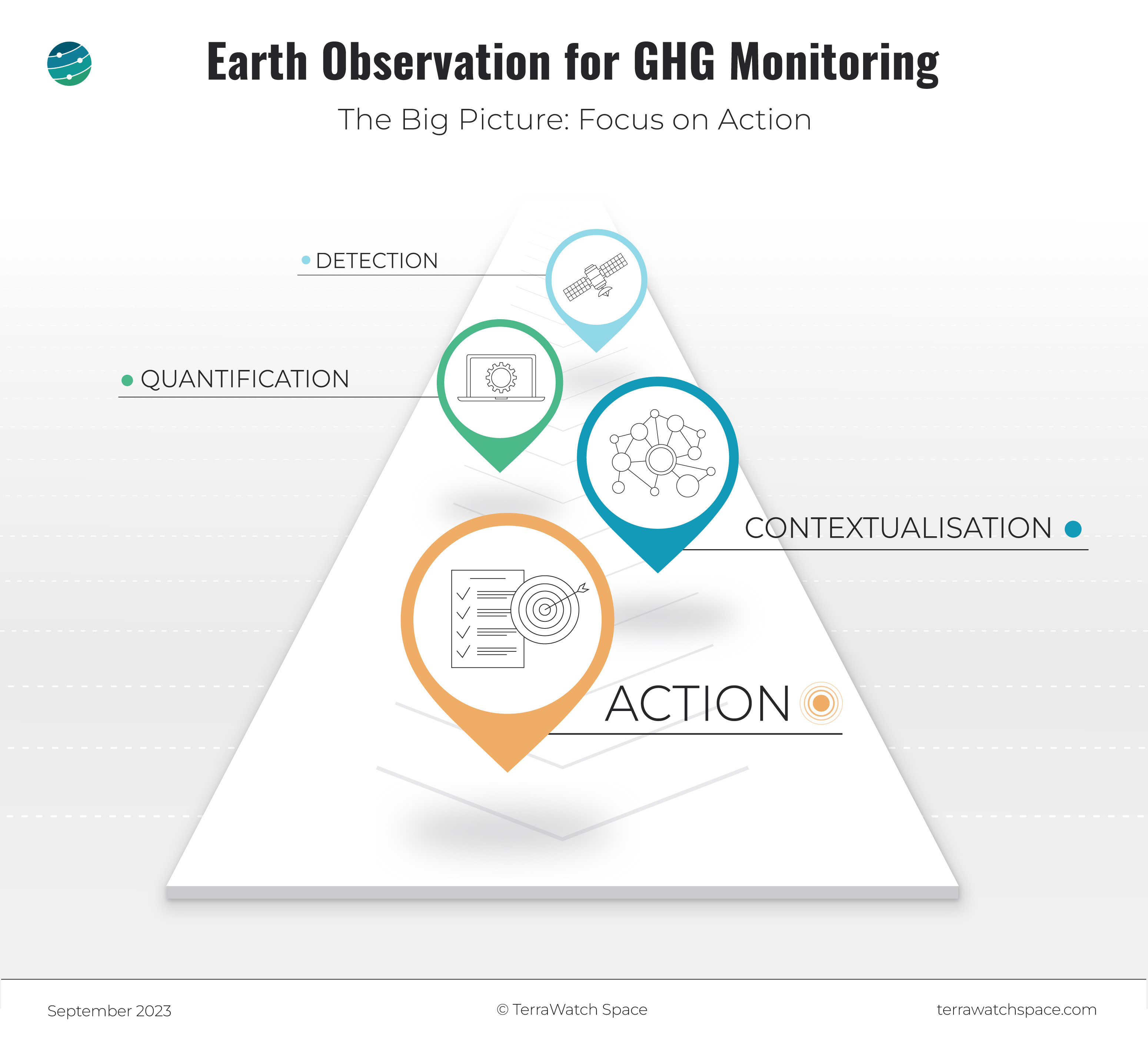
In the case of GHGs, as you can read in the essay, there are four fundamental steps involved in the EO-based GHG monitoring process: detection of GHG emissions from satellites, quantification of the GHG emissions, contextualisation of the emissions (e.g. identifying the sources) and taking action by reporting emissions, mitigating them or use them for trading.
As we dig deeper into how EO can support each of those steps, it is important to remember that until the data gathered from satellites is used to drive change, on an enterprise level and on a national/global policy level, the work is not done. It is my hope that every effort being made in the EO sector is done so with the ‘so what’ in mind.
Become a paid subscriber of the newsletter to read the full piece, with a 20% discount until October 13.
Scene from Space
One visual leveraging EO
6. The Importance of ‘Young’ Forests
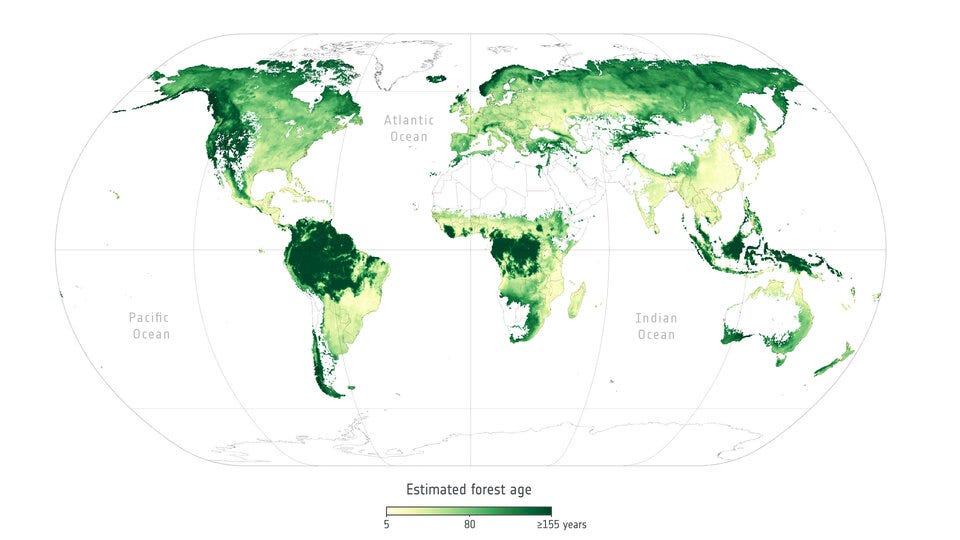
One of the reasons why forests are crucial in our fight against climate change is their ability to absorb and store carbon dioxide from the atmosphere. However new research based on data from ESA’s SMOS satellite mission has found that not all forests are equal - young and middle-aged forests (between 50 and 140 years) played a dominant role in absorbing atmospheric carbon and accumulating biomass. Forests that were 140 years old and above were found to be carbon-neutral.
Until next time,
Aravind.


