


Welcome to a new edition of ‘Last Week in Earth Observation’, containing a summary of major developments in EO from the last week and some exclusive analysis and insights from TerraWatch. Happy Earth Day!
Four Curated Things
Major developments in EO from the past week
1. Contractual Stuff: Funding, Contracts and Deals 💰
Funding
- SAR data and solutions provider Iceye has raised $93M in a new funding round to use the funds to expand its business and develop new products and services, bringing the total amount raised to $438M;
Earnings
- Satellogic reported $10.1M in revenues for 2023, representing a 68% increase compared to the previous year.
2. Strategic Stuff: Partnerships and Announcements 📈
Announcements
- XPRIZE has announced the 20 Qualified Teams for the next round of the XPRIZE Wildfire Space-Based Detection & Intelligence track, which includes some global EO startups and solutions;
Some more context - The objectives of the competition is to use space-based EO to accurately detect fires in less than a minute and report processed information such as fire characterization to people on the ground in less than 10 minutes. It was a pleasure for me to be part of the Judging Panel!
- KaleidEO, a subsidiary of Indian EO startup SatSure has completed aerial testing of its high-performance optical and multi-spectral;
- Aerospacelab, a rapidly growing satellite manufacturer announced today it completed the acquisition of AMOS, an instrument supplier for astronomy, EO, navigation and other industries.
Partnerships
Space infrastructure player D-Orbit is partnering with SkyServe, an Indian edge computing startup to enable onboard processing capabilities;
For more on edge computing, check out the deep dive from TerraWatch;
Ecosia, a tree-planting search engine, has teamed up with French startup Kanop to monitor its reforestation efforts from space;
EO firm ST Engineering Geo-Insights and consulting firm EY have signed an MoU for collaborating to build geospatial analytics solutions;
Consulting firm BCG will be collaborating with NASA and the Universities Space Research Association to explore using GenAI for EO.
3. Interesting Stuff: More News 🗞️
- China launched SuperView-3, a commercial EO satellite capable of acquiring multispectral imager at 0.5 m and a 130 km wide imaging swath;
- Maxar wants to strengthen its position in the competitive EO market by forging strategic partnerships and focusing on international opportunities;
- The World Meteorological Organization integrated Space Weather as a domain relating to its activities for the global observing system;
- ESA selected two applications focused on marine pollution and wildfires to be integrated into Φsat-2 for demonstrating onboard processing capabilities.
4. Click-Worthy Stuff: Check These Out 🔗
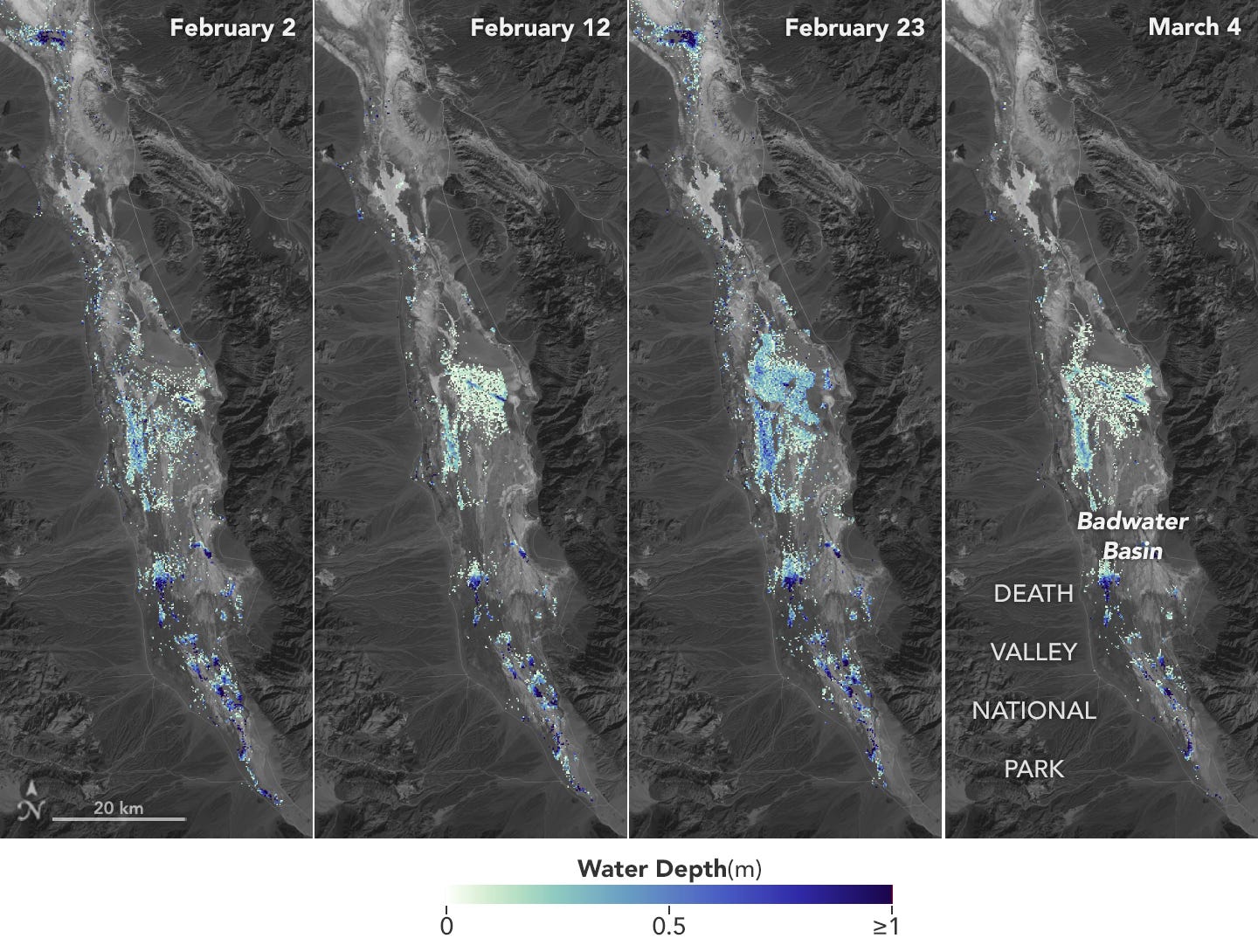
- This piece that discusses how the SWOT satellite helps monitor the change in water depths of a temporary lake in the Death Valley.
EO Summit: Intermediary Users and End Users
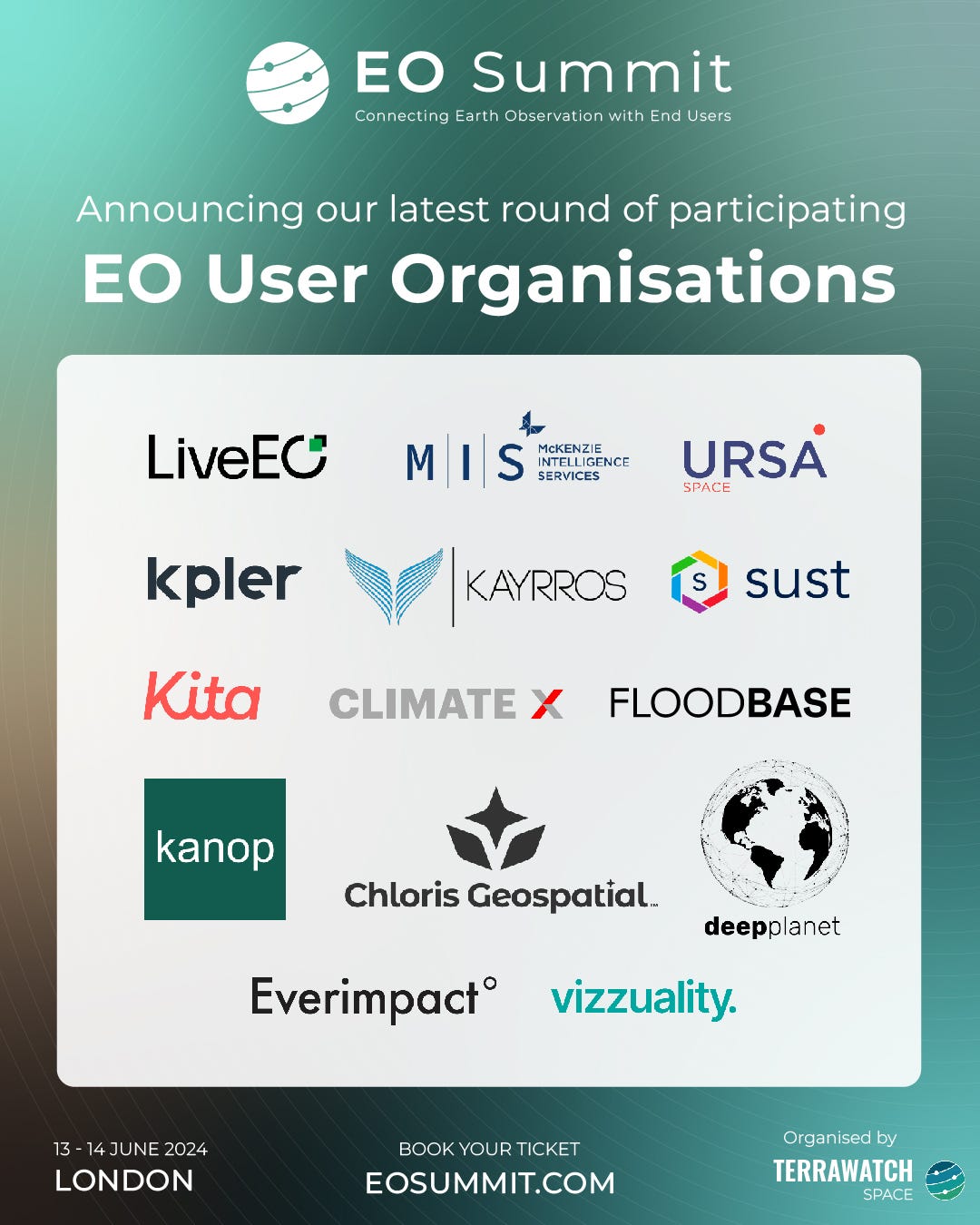
We will have several intermediary users and end users of Earth observation presenting at EO Summit to discuss their use cases and their perspectives on EO.
Intermediate users are part of the Insights and Applications segments of the TerraWatch EO Value Chain. While they are not the end users, the solutions that they develop using EO are what end users consume and hence, their inputs are significant for the growth of the EO sector.
End users are the stakeholders that are the last-mile consumers of EO. In many market verticals represented as part of the industry tracks, most end-user organisations do not care where the data comes from and are agnostic to the technology used to get the job done. This is why the role and the presence of intermediate users become crucial.
EO Summit will have presentations from both categories of users, across all of the industry tracks, with priority given to those who have operational solutions using EO (instead of those who do research work or have just completed pilot projects).
Here are some more user organisations that will be participating in the event. This is, in addition, to the other user organisations we announced before.
💸 Tip: Save €100 and book your tickets for €299 now - only until April 28! 💸
One Discussion Point
Exclusive analysis and insights from TerraWatch
5. Three Theses (aka Fundamental Beliefs) on EO
Quite a few of you have reached out to ask about my general thoughts on the state of the EO market and what I believe would be the future of EO. As you might expect, I have several thoughts, on how it is evolving and where it might be heading. While it might be hard to give answers that satisfy everyone, I wanted to share these theses on the market with you as a starting discussion point. Feel free to reply with your feedback.
Irrespective of the companies, technologies, policies and overall trends in EO, the following three theses are my core operating tenets that always stay in the back of my mind, whether I analyse the EO market or when I do consulting projects with clients or when I am advising end users on their EO strategies.
- In the end, it all boils down to this
The value of Earth observation is usually an actionable alert, a scalable API or an insightful dashboard - that is all end-users want and actually pay for. Everything else (satellites, algorithms, AI etc.) needs to be quietly, but reliably running in the background.
- The future is really quite simple
The future of EO lies in our ability to look beyond the type of sensor, the name of the provider, the kind of satellite and look deeper into the problems that can be solved with EO, and the impact that it can have.
- We need to be objective and holistic
At least one entity needs to be incentivised to be technologically holistic, commercially agnostic and fundamentally objective, while only focusing on translating the impact of EO for end-users and helping them get their job done (and this is why I founded TerraWatch!).
— — —
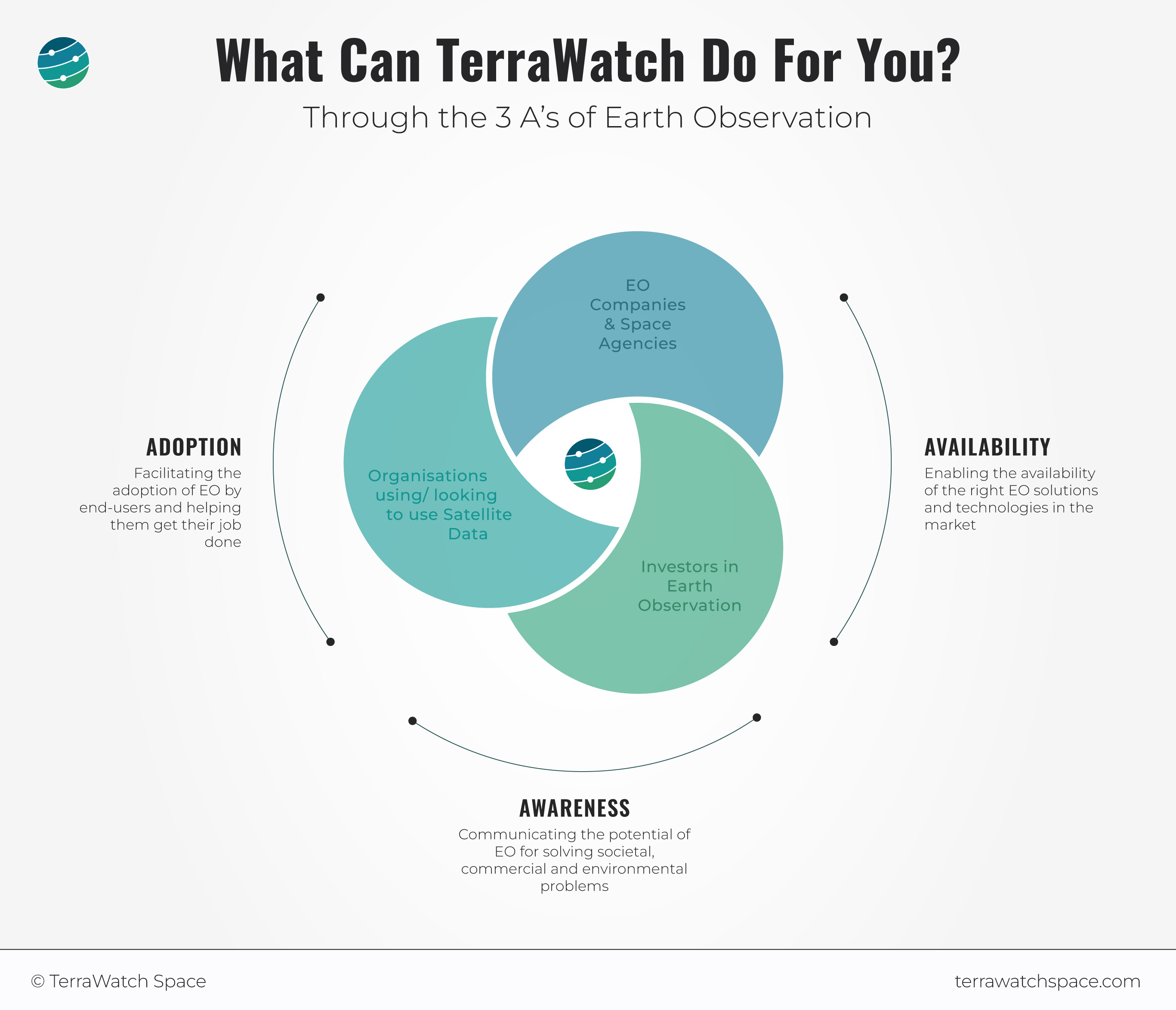
Those are the fundamental beliefs and guiding principles for everything I try to do with TerraWatch, as I work with folks across the Venn diagram - those who are building EO (the institutions and the industry), investing in EO (investors and venture capitalists) and adopting EO for solving a problem or getting a job done (any organisation).
If this was forwarded, subscribe for free to get your copy every week. Already a free subscriber? Then, become a paid subscriber and get exclusive EO insights.
Scene from Space
One visual leveraging EO
6. Flooding in the UAE (!)
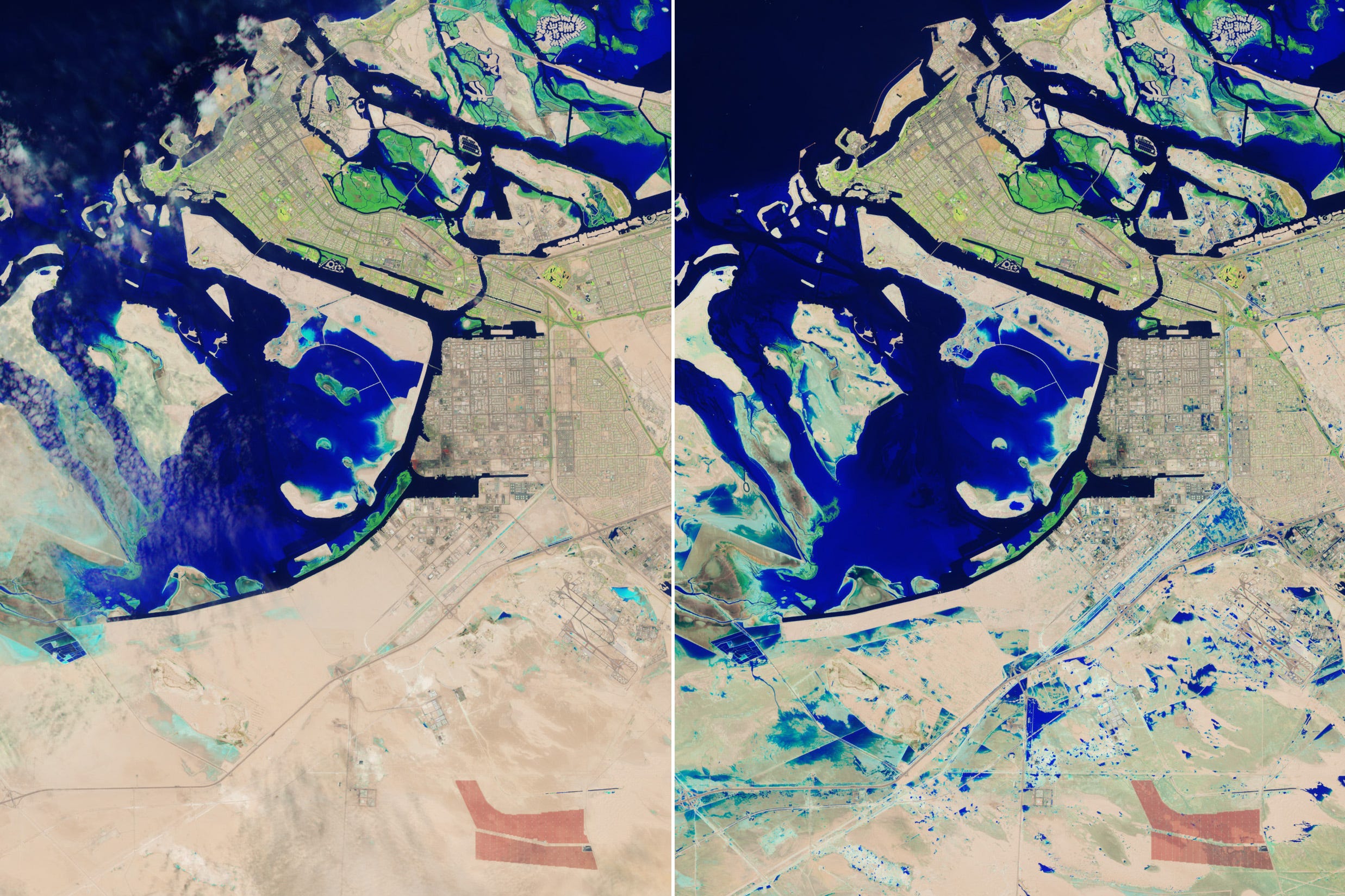
The UAE witnessed its heaviest rainfall on record in the past 24 hours, surpassing anything documented since the start of data collection in 1949. The timelapse between April 3 and April 19 shows the extent of flooding in and around Dubai, even three days after the storm hit the country on April 16.
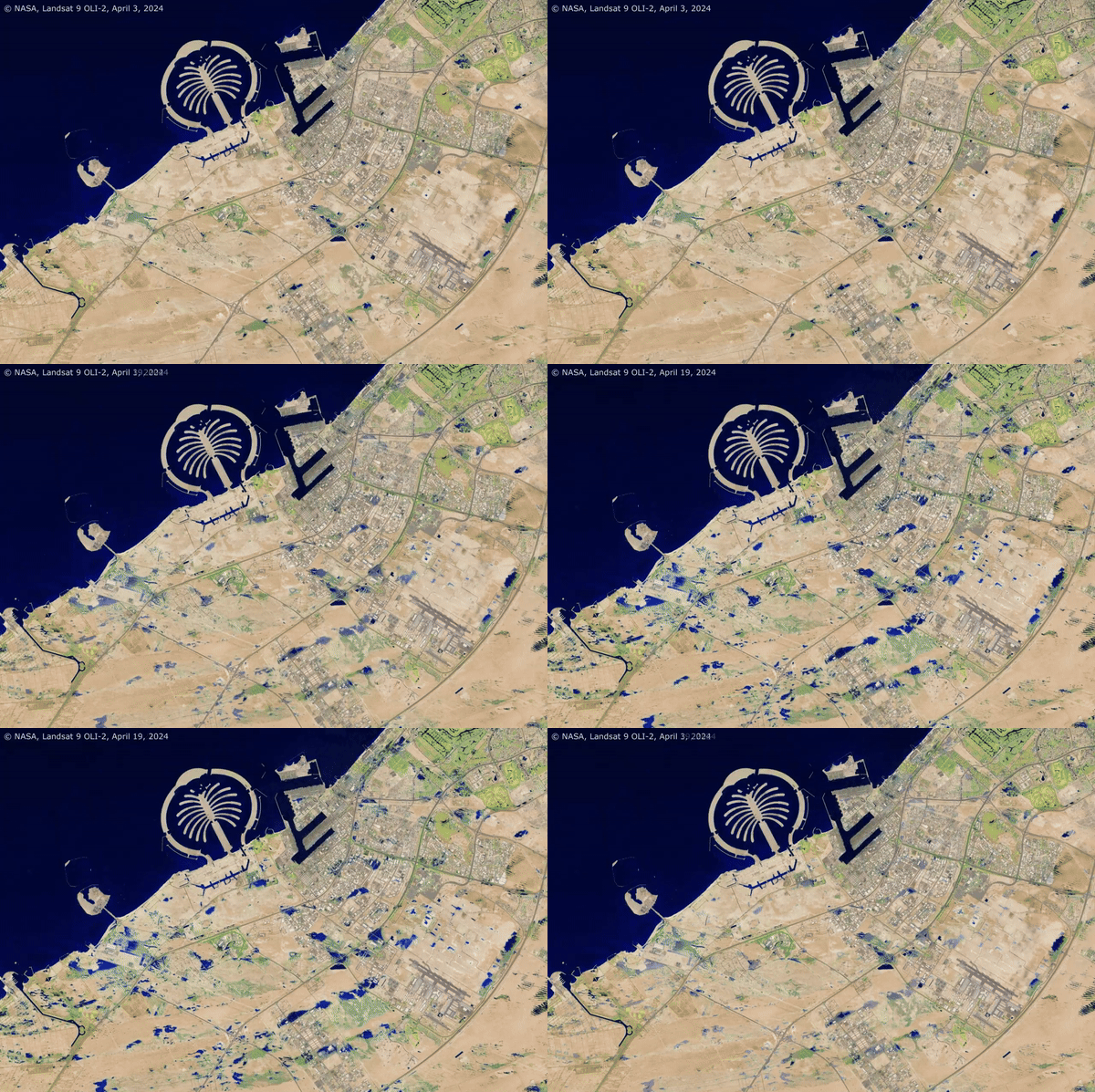
The image comparison below, courtesy of NASA’s Landsat 9 satellite shows the city of Abu Dhabi and its surrounding area on April 3 (left) and April 19 (right).
What caused this? While it will take time to quantify the roles of cloud seeding and climate change , one key point to note: Weather models, that don't factor in cloud seeding effects, were already predicting well over a year's worth of rain to fall in around 24 hours.
Until next time,
Aravind


